
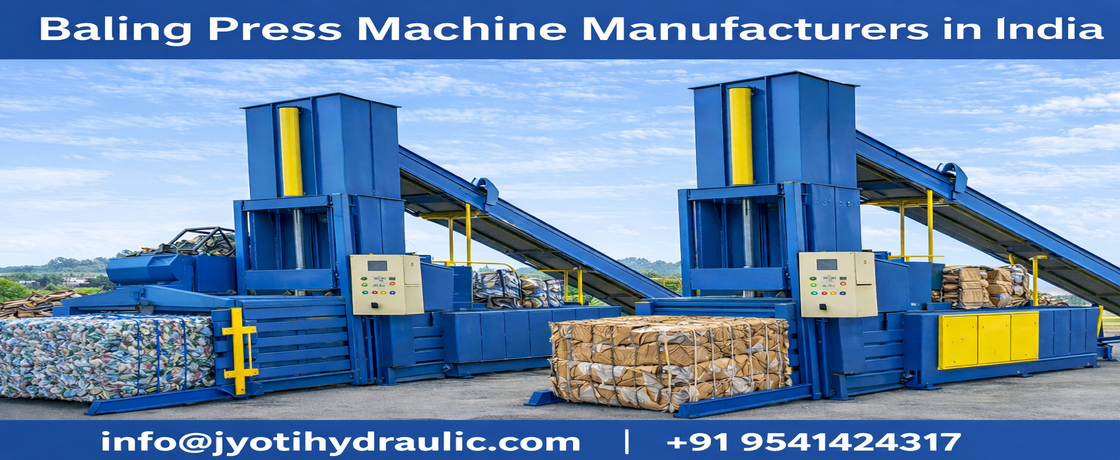
Jyoti Hydraulic is known for manufacturing dependable hydraulic machinery for industries that need efficient waste handling and material compression. A baling press machine may look simple from the outside, but its performance depends heavily on hydraulic design, frame strength, cylinder quality, and the reliability of the power pack. For businesses handling paper, plastic, cartons, textiles, or metal scrap, choosing the right manufacturer can directly affect productivity, maintenance cost, and machine life.
Faridabad is one of the major engineering and manufacturing hubs in India. With a strong base of fabrication units, hydraulic specialists, and industrial machinery manufacturers, the city has become an important location for businesses searching for reliable Baling Machine Manufacturers.
Understanding Baling Press Machines
A baling press machine is designed to compress loose waste material into compact bales. This helps reduce storage space, makes transportation easier, and improves overall waste handling efficiency.
Depending on the machine design, balers can process materials such as:
- Corrugated cartons
- Waste paper
- Plastic bottles
- PET scrap
- Textile waste
- Aluminum and light metal scrap
- Industrial packaging waste
For recycling businesses, choosing experienced Scrap Baling Machine Manufacturers is especially important because metal scrap requires higher compression force and a stronger machine structure.
Important Technical Features to Check
Before purchasing a baling press, buyers should look beyond the quoted price.
Hydraulic System
The hydraulic power pack should deliver stable pressure during every compression cycle. Poor-quality pumps, valves, or seals can result in pressure loss, overheating, and frequent breakdowns.
Cylinder Quality
The hydraulic cylinder is one of the most critical components. Properly machined piston rods, quality seals, and accurate cylinder alignment help improve operating life and reduce leakage.
Machine Frame
The frame must be designed to withstand repeated compression loads. Heavy-duty fabricated steel construction is generally preferred for industrial applications.
Bale Size and Compression Force
The required compression force depends on the material. Cardboard and plastic usually need less force than metal scrap. The chamber size should also match the quantity and type of material handled daily.
Safety Features
Emergency stop switches, pressure protection, guarded operating zones, and reliable electrical controls should be part of the machine design.
Applications of Baling Machines
Baling presses are widely used across recycling and manufacturing industries.
Paper and packaging companies use balers to compress corrugated boxes and waste paper. Warehouses and logistics centers use them to control packaging waste. Plastic recycling units compress bottles, films, and PET material before transportation.
Metal processing units use heavy-duty scrap balers to prepare recyclable metal for easier handling and melting. Textile manufacturers also use baling machines for fabric waste and cotton-related materials.
A professional Carton Baling Machines Manufacturer can help packaging companies select the right chamber size, bale weight, and hydraulic capacity based on their daily waste volume.
Benefits of Using a Baling Press
A properly selected baling machine offers several practical benefits.
It significantly reduces the volume of loose waste, which means less storage space is required. Compact bales are easier to stack, handle, and transport.
Transportation costs may also decrease because more compressed material can be loaded into the same vehicle space. Recycling operations become more organized, and workers spend less time manually handling loose waste.
For companies generating large amounts of recyclable material, these improvements can produce noticeable operational savings over time.
How to Choose the Right Manufacturer
When comparing Baling Machine Manufacturers, evaluate their engineering capability rather than choosing only on price.
Ask about the hydraulic components used in the machine, frame construction, cylinder specifications, electrical controls, available customization, and service support.
It is also worth discussing your actual material type and daily production volume with the manufacturer. A machine designed for cardboard may not be suitable for dense metal scrap, even if the chamber dimensions appear similar.
Reliable manufacturers should be able to recommend the right compression force, bale dimensions, motor capacity, and automation level according to the application.
Future of Baling Technology
Modern baling machines are gradually becoming more automated. PLC-based controls, automatic bale ejection, energy-efficient hydraulic circuits, cycle counters, and condition monitoring are increasingly being used in industrial systems.
These developments help reduce operator dependency while improving consistency and maintenance planning.
Conclusion
Choosing the right baling press machine is not simply about finding the lowest quotation. Machine strength, hydraulic performance, component quality, safety, service support, and suitability for the actual material should all be considered.
Jyoti Hydraulic focuses on developing practical hydraulic solutions for different industrial waste handling requirements. Whether the application involves cartons, plastic, paper, textile waste, or scrap material, the right machine configuration can improve productivity and reduce handling costs.
Frequently Asked Questions
What is a baling press machine used for?
It compresses loose recyclable materials into compact bales for easier storage, transportation, and recycling.
Which materials can be processed?
Common materials include cardboard, paper, plastic bottles, PET waste, textile waste, and different types of scrap.
How do I choose the correct baling capacity?
The capacity should be selected according to material density, daily waste volume, required bale size, and production requirements.
Can baling machines be customized?
Yes. Chamber size, compression force, motor capacity, bale dimensions, and control systems can be customized for specific applications.
Why is after-sales support important?
Proper technical support and spare part availability help reduce machine downtime and maintain long-term performance.
Contact Jyoti Hydraulic
Need help selecting the right baling press for your application?
Contact Jyoti Hydraulic for technical guidance, customized machine recommendations, and a competitive quotation.
📧 info@jyotihydraulic.com
📞 +91 9541424317
Request a quotation or speak with an expert to choose the right baling solution for your industrial requirements.


